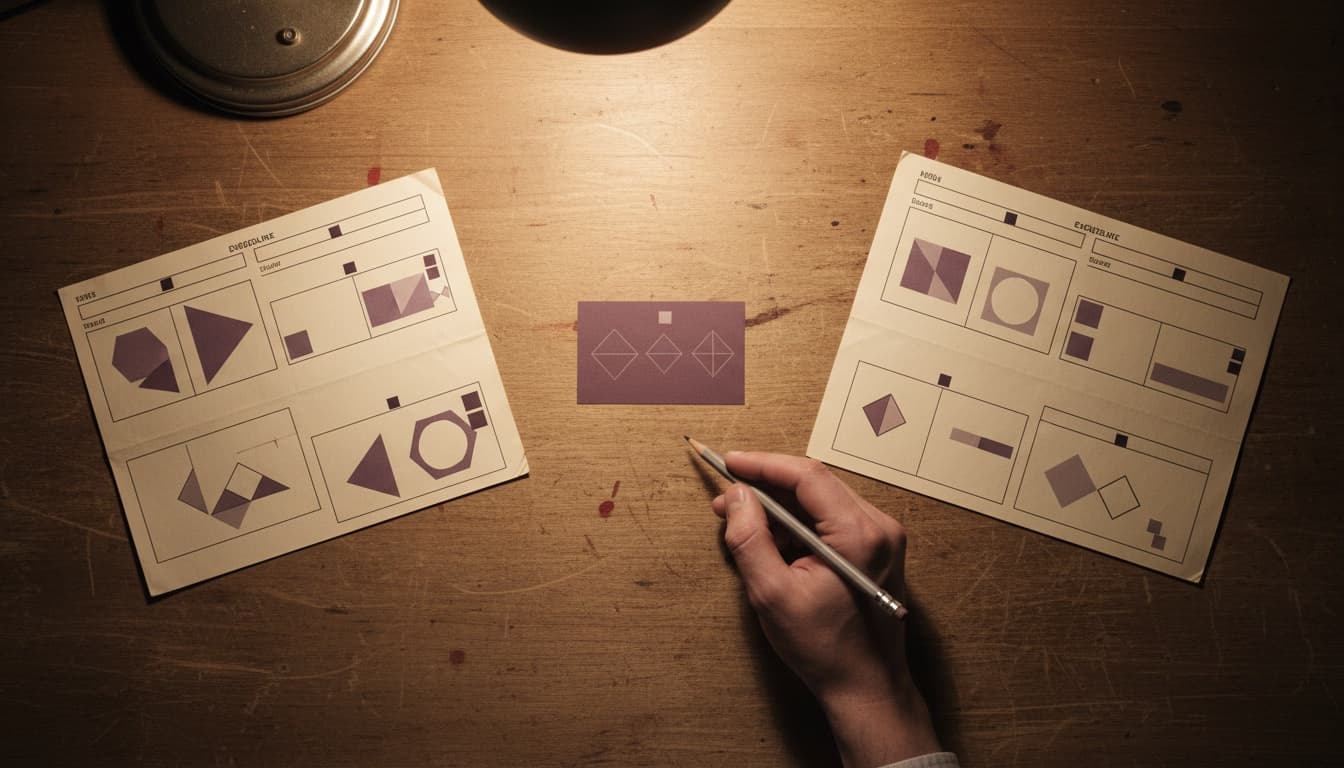
Turnkeeper's safety intelligence layer exists for a narrow reason: a privacy-minimized signal can inform a person without becoming an unreviewed action.
A detector candidate is not an accusation. An external safety signal is not a local policy verdict. A reconstructed case is not permission to enforce. Provenance, purpose, expiry, counterevidence, and human review are what keep those objects honest. The customer still owns the outcome.
That is the operating contract inside a platform. The gap appears when the same kind of object has to leave that contract and meet a case file, a records system, or an evidence index that does not speak those rules.
A digital referral is often just that object under another name: a bounded tip, a hash, a timestamp, a reason code. Somewhere else, a case already exists. Someone now has to decide whether those two records describe the same matter.
If that decision is made without the safety-intelligence discipline—suggestion, not fact; candidate links, not silent merge; human authority, not convenience—the referral becomes a case fact that nobody can defend.
Safety Intelligence Already Draws This Line
Inside Turnkeeper Ward, the work is to take bounded events, preserve where they came from and what they are allowed to be used for, reconstruct a tenant-scoped case, and put an accountable reviewer in front of any consequential outcome.
The important property is not that a dashboard can display an alert. It is that the system can still say, later:
- what arrived;
- which limits traveled with it;
- which local records were considered;
- what contradicted the hypothesis;
- who reviewed it; and
- what the customer was actually authorized to do.
A signal that cannot answer those questions is not safety intelligence. It is an unverifiable hint. The layer is there so intelligence can move without pretending it is already a decision.
That is also why the layer refuses the usual shortcuts. It does not ingest unrestricted content in order to look more complete. It does not turn detector output into enforcement. It does not build a global reputation graph. It does not execute the customer's production effect. Those refusals are the product.
The Referral Is The Same Object Outside The Layer
A platform can emit a privacy-minimized tip. A records system can hold an open case. A forensic store can index an export. Each of those objects may be valid on its own.
They still do not share a chain of custody.
The tip may use an opaque reference the case system has never seen. The case may use a local identifier the platform cannot resolve. The evidence index may know a hash without knowing which investigation is allowed to see it. When those records are reconciled by habit, chat, or copy-paste, the organization loses the ability to say what was linked, by whom, under what authority, and on what evidence.
That is not a missing alert. It is the safety-intelligence contract stopping at the platform boundary.
More dashboards do not fix it. A shared spreadsheet does not fix it. Absorbing the tip into the case file makes it worse, because the case then inherits a conclusion without inheriting the uncertainty, the rejected alternatives, or the reviewer.
A Suggestion Is Not A Fact
Safety intelligence already says this in platform language: a signal is not a verdict.
The same sentence has to survive when the recipient is an investigator rather than a trust-and-safety reviewer. A referral says this bounded object may be related to work you already have. It does not say the records are the same person, the same incident, or the same legal matter.
Candidate similarity is not identity. A matching hash is not permission to disclose. A high-confidence score is not a charging decision. Specialist findings are hypotheses with supporting and contradicting evidence, not silent permanent facts.
Investigative work already understands this distinction in paper files. Two folders can sit on the same desk without being combined. Digital workflows often collapse that pause. The interface offers a merge, a link, or an export, and the suggestion becomes the working record.
Once that happens, later reviewers inherit the conclusion without inheriting the safety-intelligence record: provenance, limits, counterevidence, and the human decision. What remains looks like a fact because the system stored it that way.
Silent Merge And Unreviewed Disclosure
The first failure is an unexamined join.
If a referral is absorbed into an existing case without a recorded decision, the case file now contains an origin it cannot defend. If two cases are combined because identifiers looked similar, later disclosure or supervisory review has to reconstruct a choice that was never written down. If a matcher auto-links on metadata and hides the candidates it rejected, nobody can explain why this match won.
A defensible workflow keeps the referral distinct until a person with authority confirms or rejects the link. It shows the candidate matches, including near-misses. It records the decision, the actor, and the reason. It does not rewrite the source records to make the interface look tidy.
The second failure is sending the joined picture onward before a human has accepted the effect.
Export packages, inter-agency shares, and downstream notices are production actions. They change who can see a record and what that record now claims. In the safety-intelligence layer, that is the same rule as exact-effect authorization: intelligence may inform a person; it may not become an unreviewed enforcement or disclosure action.
The person who explores candidate links is not automatically the person who may export. The export should describe a specific, authorized package. No system should execute that step because a model, a score, or a convenience workflow recommended it.
What Has To Travel With The Signal
The missing piece is not another intake form. It is carrying the safety-intelligence properties across the handoff:
- What bounded object arrived, and from which authorized source?
- What purpose, expiry, and revocation limits traveled with it?
- Which local records were considered, and why?
- Which candidate links were presented, including the ones that were not taken?
- Who confirmed, rejected, or deferred the association?
- What exact disclosure or export, if any, was later authorized?
- What remains a suggestion rather than a case fact?
That account has to be reconstructable without original message bodies, attachments, or unrestricted personal content. Metadata, opaque references, hashes, timestamps, and decision records are enough to explain the path. They are also enough to keep the control layer from becoming a second copy of the case file.
Until a human accepts the link, the systems should not pretend they already agree.
What This Is Not
This is not an argument for a surveillance layer, a predictive-policing engine, or a replacement for the systems of record investigators already use.
It is not an argument that Ward should become a law-enforcement console, a reporting authority, or a substitute for mandated reporting channels. It should not decide guilt, arrest, charge, or warrant. It should not ingest unrestricted case text or evidence payloads in order to look more complete. It should not silently merge records across tenants or agencies.
Cross-system intelligence can inform a person. It cannot become the action. That is already the safety-intelligence boundary. The referral problem is what happens when the boundary is dropped at the moment the object leaves the platform.
Explore The Handoff, Not A New Category
Turnkeeper already has the layer for this shape of problem: bounded signals, preserved provenance, reconstructed cases, human review, and customer-owned outcomes. We are exploring the handoff with synthetic, de-identified workflows so we can see where a suggestion stops being honest once it meets a case file.
We are not operating a law-enforcement system. We are not claiming CJIS compliance. We are not launching a generally available investigative product, and we are not asking anyone to replace a records system in order to talk with us.
If you investigate digital referrals and this gap is real in your unit, we want to hear how the work actually moves: where a platform signal meets a case, who is allowed to confirm a link, and what must never be disclosed without a recorded decision. Those conversations should start from the operating reality, not from a product announcement.
The design-partner path is at turnkeeper.ai